
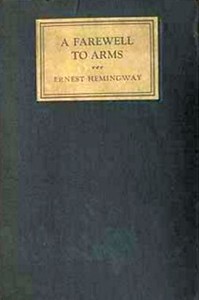
A farewell to arms by Ernest Hemingway
If you're looking for a happy war story, you won't find it here. But if you want a story that feels painfully, beautifully human, this is it.
The Story
The story is told by Frederic Henry, an American serving as an ambulance driver for the Italian army in World War I. He's detached, floating through the war. Then he meets Catherine Barkley, a nurse who is grieving a lost love. Their relationship begins almost as a game, a way to forget the war. But after Frederic is badly wounded and sent to a hospital in Milan, Catherine arrives to nurse him. Away from the front, their love deepens into something real and fragile. They create a private world of their own, a sanctuary. But the war isn't done with them. Frederic must return to the front, where a chaotic retreat throws him into ultimate danger. Facing execution by his own allies, he makes a desperate choice: to desert, to say 'a farewell to arms.' His only goal is to get back to Catherine and the life they've dreamed of, racing against a world that offers no safe harbor.
Why You Should Read It
Hemingway's famous style—short sentences, plain words—is perfect for this story. It doesn't romanticize. It shows you the mud, the fear, the stupid bureaucracy of war, and the simple acts of eating and drinking that keep you going. Because the prose is so clear, the emotional moments hit with incredible force. You feel the weight of every quiet conversation between Frederic and Catherine. Their love isn't flashy; it's built on shared vulnerability in a world gone mad. The book makes you understand how people cling to each other when everything else is falling apart. It’s also shockingly modern in how it portrays trauma and the search for meaning when all the old certainties are gone.
Final Verdict
This book is for anyone who appreciates a masterfully told, emotionally honest story. It's perfect for readers who love historical fiction but want the psychology to feel real, not just the uniforms. It's for people who don't mind a story that sits with you for days after you finish it, making you think about love, loss, and the small choices that define us. If you've ever felt like you were trying to build something good in a chaotic time, you'll find a piece of yourself in these pages. Just keep a box of tissues nearby.
Legal analysis indicates this work is in the public domain. You can copy, modify, and distribute it freely.
Charles White
1 year agoBefore I started my latest project, I read this and the way it handles controversial points with balance is quite professional. Truly a masterpiece of digital educational material.
Robert Jackson
6 months agoWhile browsing through various academic sources, the bibliography and references suggest a high level of research and authority. This has become my go-to guide for this specific topic.
Dorothy Miller
1 year agoHaving read this twice, the pacing is just right, keeping you engaged. Thanks for sharing this review.
Margaret Rodriguez
1 year agoWithout a doubt, the flow of the text seems very fluid. Worth every second.




Charles Wilson
3 months agoAs a long-time follower of this subject matter, the insights into future trends are particularly thought-provoking. A refreshing and intellectually stimulating read.