
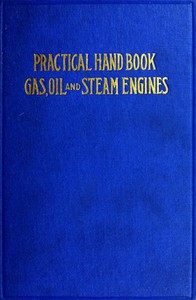
Practical Hand Book of Gas, Oil and Steam Engines by John B. Rathbun
Let's be clear from the start: this is not a novel. There's no protagonist named Jack fighting corporate greed in a steel mill. The 'story' John B. Rathbun tells is the story of the machine itself. Published in 1892, this book is a field manual from the peak of the steam age.
The Story
The book walks you through the entire life of an engine. It starts with the raw principles: what is heat, how does pressure work, why does steam expand? Then, it gets its hands dirty. Rathbun explains, in methodical detail, the different types of gas, oil, and steam engines. You get chapters on boilers, pistons, valves, and governors. He includes clear, labeled diagrams of cutaway engines, showing exactly how fuel becomes fire, fire becomes steam, and steam becomes turning power. There are instructions for operation, crucial maintenance routines, and—most importantly—troubleshooting guides. The 'plot' is the process of taking chaotic natural force and taming it into reliable, measurable work.
Why You Should Read It
I loved this book because it completely changed how I see the past. History books talk about the 'Steam Age,' but this book lets you live in it. Reading Rathbun's precise, practical language, you feel the responsibility of the engineer. A mistake isn't just a bad grade; it's a potential explosion. The care in his instructions—how to check water levels, how to listen for unusual knocks—is palpable. It turns anonymous factory workers and railroad engineers into skilled technicians, problem-solvers who understood their complex charges intimately. The book is a powerful antidote to thinking of history as something that just happened. It shows you the manual labor of progress, one bolt, one valve, one careful calculation at a time.
Final Verdict
This is a niche book, but a brilliant one. It's perfect for history buffs who want to go beyond dates and names, for engineers or mechanics curious about their field's foundations, or for any reader fascinated by how things work. If you enjoy YouTube channels that restore old machinery or museums with working models, you'll find the original source material here. It's not a breezy read; you have to want to engage with the diagrams and the technical descriptions. But if you do, it's incredibly rewarding. You'll close the book with a newfound respect for the ingenuity and sheer grit that powered a world.
This historical work is free of copyright protections. You do not need permission to reproduce this work.
Patricia White
2 months agoI stumbled upon this title during my weekend research and the emphasis on ethics and sustainability within the topic is commendable. A mandatory read for anyone in this industry.
Paul Brown
9 months agoMy professor recommended this, and I see why.
Jennifer Miller
2 years agoCitation worthy content.
Daniel Torres
1 year agoThis book was worth my time since the clarity of the writing makes this accessible. Don't hesitate to start reading.





Mary Rodriguez
1 year agoI particularly value the technical accuracy maintained throughout.