
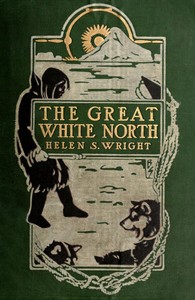
The Great White North by Helen S. Wright
Helen S. Wright's The Great White North is a quiet, powerful memoir that pulls you into a world of stark beauty and immense challenge. Published in 1910, it chronicles her real-life journey from England to the Canadian prairies as a settler.
The Story
The book follows Helen as she trades the predictable rhythms of English society for the vast, empty plains of Manitoba. There's no grand plot with twists and turns. Instead, Wright walks us through the relentless daily reality: building a home from scratch with her husband, facing winters so cold they defy description, and learning to farm land that doesn't want to be farmed. We see her struggle with sheer physical exhaustion, the constant threat of illness far from a doctor, and the aching loneliness that comes from being miles from the nearest neighbor. The "story" is her internal battle to find purpose, resilience, and even moments of joy in a life that is overwhelmingly harsh.
Why You Should Read It
I loved this book for its honesty. Wright doesn't paint herself as a hero. She gets frustrated, scared, and deeply homesick. That's what makes her triumph—simply enduring and eventually carving out a life—so meaningful. Her observations are sharp and often dryly funny. She writes about the landscape with a mix of awe and terror, making you feel the biting wind and see the breathtaking sweep of the northern lights. Reading it feels like sitting at her kitchen table after a long day, listening to her stories. It’s a deeply personal look at a chapter of history we often only see in broad strokes.
Final Verdict
Perfect for readers who love real-life stories of resilience, fans of frontier history, or anyone who enjoys a quiet, character-driven narrative. If you liked the feeling of Laura Ingalls Wilder's books but want an unvarnished, adult perspective, this is for you. It's not a fast-paced page-turner; it's a slow, immersive experience that will stick with you long after you finish the last page. A forgotten gem that deserves to be rediscovered.
No rights are reserved for this publication. You can copy, modify, and distribute it freely.
Ashley Brown
9 months agoMy first impression was quite positive because the way it handles controversial points with balance is quite professional. A trustworthy resource that I'll keep in my digital library.
Thomas Wilson
8 months agoHaving explored several resources on this, I find that the argument presented in the middle section is particularly compelling. An excellent example of how quality digital books should be formatted.
Nancy White
1 month agoAs a long-time follower of this subject matter, the practical checklists included are a great touch for real-world use. This is a solid reference for both beginners and experts.
Richard Jones
5 months agoI was particularly interested in the case studies mentioned here, the author doesn't just scratch the surface but goes into meaningful detail. Truly a masterpiece of digital educational material.

Joseph Martin
10 months agoMy first impression was quite positive because the transition between theoretical knowledge and practical application is seamless. Highly recommended for those seeking credible information.