About 642 minutes
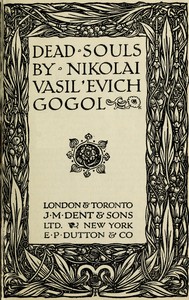
Dead Souls — Inside the Classic
Historical Psychological Social Fiction
147,565 recorded words. 37 minutes difference from this book's estimate.
View Gutenberg source #1081
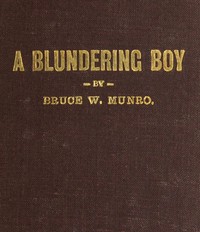
For A Blundering Boy: A Humorous Story — Background and Themes, the stored edition analysis reports 139,098 words, 10 hr 5 min estimated reading time, and 14 detected text sections.
The text analysis averages about 17.1 words per sentence, while the detected sections provide another way to judge how the source is divided.
Project Gutenberg metadata also associates the work with “Humorous stories,” connecting these edition facts with the source record’s subject description.
Explore this collection
These alternatives are selected using recorded categories and estimated reading time.
About 642 minutes
Historical Psychological Social Fiction
147,565 recorded words. 37 minutes difference from this book's estimate.
View Gutenberg source #1081About 512 minutes
Historical Psychological Social Fiction
117,677 recorded words. 93 minutes difference from this book's estimate.
View Gutenberg source #58070About 705 minutes
Historical Psychological Social Fiction
161,958 recorded words. 100 minutes difference from this book's estimate.
View Gutenberg source #6053Search stored excerpts and compare books → Choose by your preferences →
Choices use stored catalog measurements. Estimates vary with reading speed. A shared category is a catalog label, not a claim that two books have the same argument or literary quality.
Search reads excerpt text stored with this catalog and links to its associated Gutenberg record. The connection is stored in the site database; this tool does not recheck that every excerpt is word-for-word identical to that external record. Excerpt search does not cover every chapter and does not verify historical publication dates.
Catalog snapshot checked: 2026-09-25. Coverage: 91 public books, 91 available source excerpts.
Read the complete public-domain text at its original source.
Read on Project GutenbergBruce Weston Munro’s 1887 novel opens with a preface that declares its intention “to be absurd; to cast ridicule on certain pedants and romancers.” The narrator immediately establishes a playful, intrusive voice, warning readers that the story is “silly” yet “deeper than it at first appears.” This self-conscious framing sets the tone for a work that constantly undercuts its own plot developments.
The catalog subjects label it a humorous story about boys, but the excerpts reveal a more specific target: the conventions of sentimental romance. In one scene, the bedridden hero Henry receives a book from a visitor, misinterprets a fly-leaf inscription, and spirals into jealousy over a rival named Johnny Jones. The narrator steps in to analyze Henry’s contradictory feelings, noting that lovers often find rivals “despicable” yet still fear them. This meta-commentary is typical of Munro’s method.
The most distinctive feature of A Blundering Boy is its narrator, who frequently breaks the fourth wall to comment on the story’s own mechanics. In the preface, Munro announces his intent to “jeer at the ridiculous solemnity, mystery, and villainy” of typical fiction. This promise is fulfilled throughout the excerpts: when Henry agonizes over a book’s fly-leaf initials, the narrator dryly observes that “a book-seller often scrawls a cipher or two on the fly-leaves of his books.” The reader is never allowed to forget that they are reading a constructed tale.
The narrator also editorializes about human nature. After describing Henry’s jealousy, he writes that “to a man whose thoughts never rise above the earth… this may seem preposterous; but it is true.” He then declines to explain further, leaving the task “for some one who can do so more ably.” This coy refusal is a recurring tactic, used to mock both the characters and the reader’s expectations.
Munro’s narrative voice is thus the book’s true subject. The plot—involving a cave, a balloon, and a mad dog—is secondary to the narrator’s running commentary on the absurdity of storytelling itself.
Despite the book’s humorous label, the excerpts focus heavily on Henry’s romantic suffering. He is bedridden, visited by a woman who brings him a book and kisses his forehead. Henry’s internal monologue reveals a boy who reads immense significance into small gestures: “Her book!” he thinks, and later, “She sent it to me! Of course she did.” The narrator notes that Henry is “capable of strong feelings; in some respects he was a boy; in others, a man.”
The romantic plot is driven by misreading. Henry finds two initials on the fly-leaf and immediately assumes they stand for “J. J.”—his rival Johnny Jones. The narrator points out that the writing was “very bad” and likely a bookseller’s mark, but Henry’s jealousy overrides logic. This pattern of misinterpretation aligns with the book’s title: blundering is not just physical but emotional.
The excerpts do not reveal whether Henry’s love is requited or if the cave adventure ever occurs. The narrator notes that Henry “was fated never to explore the Demon’s Cave” because the city fathers demolished it. This anticlimax is typical of Munro’s refusal to deliver conventional satisfaction.
Munro’s preface explicitly targets “pedants and romancers,” and the excerpts show him systematically undermining the tropes of Victorian fiction. The chapter titles themselves are parodic: “Three Wise Men Went to Sea in a Bowl,” “A Lesson in Ballooning,” and “The Blunderer at Work Again.” These promise adventure but often deliver bathos.
One key example is the fate of the Demon’s Cave. After building up the cave as a site of mystery, the narrator reports that the City Fathers “convoked a council” and resolved to demolish it. The cave “had served its purpose: it was no more.” The narrator adds that “the view from the opposite bank was marred; but the City Fathers knew that they had done their duty.” This deadpan delivery mocks the reader’s expectation of a thrilling climax.
Similarly, the narrator’s habit of analyzing characters’ psychology in a pseudo-scientific tone—as when he explains jealousy—parodies the earnest moralizing of contemporary fiction. Munro’s humor is thus intellectual, relying on the reader’s familiarity with the conventions he is subverting.
Readers approaching A Blundering Boy should expect a work that is less a straightforward story than a sustained joke about storytelling. The humor depends on recognizing the tropes Munro mocks—sentimental love, mysterious caves, noble heroes—and appreciating the narrator’s dry asides. The excerpts suggest that the book’s pleasures lie in its voice rather than its plot. Those who enjoy metafictional play will find much to admire; those seeking a conventional boy’s adventure may be frustrated by the constant interruptions and anticlimaxes.
I remember being thirteen and utterly convinced my awkwardness was unique, and I found that same tender absurdity in Henry’s blunders. It reminds me of how I felt holding the little girl’s photo album, her pride so plainly real against its laughing frame. Both books let me smile at youthful earnestness without mocking the heart behind it. "The Fotygraft Album" Shown to the New Neighbor by Rebecca Sparks Peters Aged Eleven — Text and Context felt like that quiet wink across time.
A brief reflection can help important ideas stay with you longer.