About 38 minutes
The Story of an Ostrich: An Allegory and Humorous Satire in Rhyme. — Background and Themes
Historical Psychological Social Fiction
8,680 recorded words. 0 minutes difference from this book's estimate.
View Gutenberg source #37530
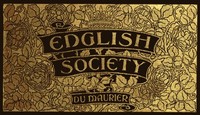
The catalog record for English Society — Key Ideas to Explore provides practical reading context through 8,689 words, 38 min estimated reading time, and 2 detected text sections.
The text analysis averages about 15.1 words per sentence, while the detected sections provide another way to judge how the source is divided.
Project Gutenberg metadata also associates the work with “English wit and humor, Pictorial,” connecting these edition facts with the source record’s subject description.
Explore this collection
These alternatives are selected using recorded categories and estimated reading time.
About 38 minutes
Historical Psychological Social Fiction
8,680 recorded words. 0 minutes difference from this book's estimate.
View Gutenberg source #37530About 29 minutes
Historical Psychological Social Fiction
6,461 recorded words. 9 minutes difference from this book's estimate.
View Gutenberg source #16639About 87 minutes
Historical Psychological Social Fiction
19,807 recorded words. 49 minutes difference from this book's estimate.
View Gutenberg source #25322Search stored excerpts and compare books → Choose by your preferences →
Choices use stored catalog measurements. Estimates vary with reading speed. A shared category is a catalog label, not a claim that two books have the same argument or literary quality.
Search reads excerpt text stored with this catalog and links to its associated Gutenberg record. The connection is stored in the site database; this tool does not recheck that every excerpt is word-for-word identical to that external record. Excerpt search does not cover every chapter and does not verify historical publication dates.
Catalog snapshot checked: 2026-09-25. Coverage: 91 public books, 91 available source excerpts.
Read the complete public-domain text at its original source.
Read on Project GutenbergGeorge Du Maurier's English Society opens not with a cartoon but with a memoir—a tribute by an unnamed admirer reflecting on Du Maurier's late-life turn to novel-writing after decades as a caricaturist. The writer confesses that the final third of Trilby felt forced, yet praises the 'gay, sad story' and Du Maurier's 'true-dreaming' in Peter Ibbetson. This preface frames the book as a posthumous collection, inviting readers to consider how the visual humor that follows relates to the literary ambitions of a man who 'commenced novelist at sixty.'
The opening memoir does more than eulogize; it establishes a critical lens. The writer notes that Du Maurier's success as a novelist was 'without a parallel'—a man who had always been an author in the 'literary property of his work' but only later revealed his full narrative gifts. This observation primes readers to see the cartoons not as mere jokes but as scenes from a novelist's eye, each caption a compressed story. The preface's ambivalence about Trilby's popularity—'the disgust with its preposterous popularity'—suggests that Du Maurier valued craft over acclaim, a tension that echoes in the satirical targets of the sketches: social climbers, pretentious artists, and the hollow rituals of the elite.
The middle excerpts showcase Du Maurier's skill at encapsulating social friction in a single exchange. In 'THE JOYS OF HOSPITALITY,' Jenkins calls Tomkins a 'brute' and 'skunk,' only to learn the hostess has been told 'merely what you've just been saying about him.' The humor hinges on the gap between private insult and public exposure—a recurring theme. 'DISAPPOINTMENTS OF LION-HUNTING' skewers celebrity culture: Lady Circe complains that asking celebrities' wives and families means 'the wives and families come in their thousands' while 'the celebrities stay at home and go to bed.' These captions are not one-liners but compressed social observations, rewarding readers who pause to unpack the dynamics.
Later excerpts blend visual and verbal irony more explicitly. In 'NATURE VERSUS ART,' just as Stodge is about to explain his painting's 'recondite subtleties' to admiring women, his wife enters 'with the baby, confound it!'—a deflation of artistic pretension by domestic reality. 'A NEW READING OF A FAMOUS PICTURE' has a child misinterpreting a burial scene as 'burying the baby,' undercutting solemnity with innocence. These sketches rely on the reader's ability to read both image and text, a skill the preface's literary framing encourages. The captions often end with a punchline that reverses expectations, as in 'TRUE BLUE,' where a listener asks if brilliant speeches ever change one's mind—implying they do not.
Du Maurier populates his society with recognizable types: the Guardsman, the Fair California Widow, the Hostess, the Lion-Hunter. In 'TWO ON A TOWER,' a rising architect tells a widow he cannot find her a legend but 'could add a story'—a pun that bridges architecture and narrative. 'PROFESSIONAL BEAUTIES OF THE PAST' has a housekeeper misidentify Catherine de Medici as 'sister to the Venus of that name,' mixing historical and mythological registers. These recurring figures create a coherent social world where status is performed through wit, and missteps are mercilessly recorded. The reader becomes a fellow observer, decoding the rules of a game where a single line can reveal character.
Reading English Society from start to finish reveals a progression: the preface's literary reflection gives way to increasingly layered visual-verbal satire. First-time readers may benefit from treating each sketch as a vignette in a larger comedy of manners, noting how Du Maurier's captions often do more work than the images. The collection rewards attention to repeated motifs—hospitality, art, marriage, celebrity—and to the gaps between what characters say and what the reader knows. Approach it not as a gallery of jokes but as a novelist's sketchbook of Victorian life.
Sitting with Du Maurier’s sketches, I remembered my grandfather’s copy of Uncle Tweazy and his quizzical neighbours, vol. 1 of 3 — Story, Setting & Ideas, its margins full of his pencil notes. Both books feel like watching polite society through a window, half-smiling at the absurdity. The captions guide gently, like a friend whispering, “look there”—and I’m grateful for that quiet company.
Use these questions to collect your thoughts before moving on.