About 38 minutes
English Society — Key Ideas to Explore
Historical Psychological Social Fiction
8,689 recorded words. 0 minutes difference from this book's estimate.
View Gutenberg source #38111
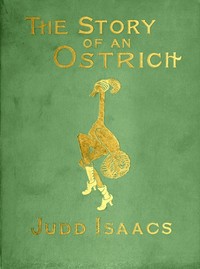
Before opening The Story of an Ostrich: An Allegory and Humorous Satire in Rhyme. — Background and Themes, the edition data offers a quick orientation: 8,680 words, 38 min estimated reading time, and 2 detected text sections.
The text analysis averages about 30.6 words per sentence, while the detected sections provide another way to judge how the source is divided.
Project Gutenberg metadata also associates the work with “Satire,” connecting these edition facts with the source record’s subject description.
Explore this collection
These alternatives are selected using recorded categories and estimated reading time.
About 38 minutes
Historical Psychological Social Fiction
8,689 recorded words. 0 minutes difference from this book's estimate.
View Gutenberg source #38111About 29 minutes
Historical Psychological Social Fiction
6,461 recorded words. 9 minutes difference from this book's estimate.
View Gutenberg source #16639About 87 minutes
Historical Psychological Social Fiction
19,807 recorded words. 49 minutes difference from this book's estimate.
View Gutenberg source #25322Search stored excerpts and compare books → Choose by your preferences →
Choices use stored catalog measurements. Estimates vary with reading speed. A shared category is a catalog label, not a claim that two books have the same argument or literary quality.
Search reads excerpt text stored with this catalog and links to its associated Gutenberg record. The connection is stored in the site database; this tool does not recheck that every excerpt is word-for-word identical to that external record. Excerpt search does not cover every chapter and does not verify historical publication dates.
Catalog snapshot checked: 2026-09-25. Coverage: 91 public books, 91 available source excerpts.
Read the complete public-domain text at its original source.
Read on Project GutenbergThe poem opens with an ostrich suffering a headache, a mundane complaint that quickly escalates into a philosophical council of animals. The snail, the hatter, and the peacock each weigh in on the ostrich's plight, turning a physical ailment into a metaphor for social and political disorder. The hatter's speech, for instance, invokes a "well defined principle—Divinely appointed, eternal, invincible" to justify the ostrich's pain as a corrective for folly. This blend of whimsy and earnest argument sets the tone for a work that is both humorous and pointed.
The publisher's preface emphasizes the book's physical uniqueness: hand-printed letters, illustrations that tell a story "of powers behind the scenes," and a deliberate harmony between text and image. The artist's announcement reveals a shift from seeing it as a "merely juvenile theme" to recognizing a "deeper signific"—a phrase cut short in the excerpts, hinting at layers beneath the surface.
The central conceit—an ostrich with a headache—is treated with deadpan seriousness by the animal council. The hatter argues that nature made no mistake in giving the ostrich a head that will ache, so that "some well sustained kicks may reveal him his folly." This logic transforms pain into a tool of correction, aligning with the poem's satirical edge. The snail, by contrast, withdraws into his shell, embodying cautious retreat. The peacock listens with "bated emotion," suggesting suppressed passion. These reactions mirror political stances: the hatter as a conservative rationalizer, the snail as an isolationist, the peacock as a potential agitator. The excerpts do not reveal the council's final verdict, but the framing invites readers to see the ostrich's ailment as a stand-in for societal ills—perhaps labor unrest or class conflict, given later references to "the head and the feet" as labor and capital.
The publisher's preface insists that the book's physical production is integral to its meaning. The hand-printing, "kept free from ornate fancies," is designed to be "particularly easy to read" and to harmonize with Edmund Nolcini's illustrations. The illustrations are described as telling a story "not only of the real and material world, but also of powers behind the scenes," offering motives and cues for the actors on "the great stage of life." This suggests that the images add a layer of allegory beyond the poem itself. The artist's announcement notes his initial impression of a "merely juvenile theme," which he later revised—implying that the visual interpretation deepens the satire. The excerpts include only text, but the preface frames the book as a multimedia object where typography and drawing collaborate to critique surface appearances.
Section XI of the poem explicitly separates "the head from the feet, labor from capital," warning that war between them leads to confusion likened to humanity "being continually brewed by Satan in an enormous caldron." This vivid image frames class struggle as a diabolical process, yet one that ultimately serves renovation and purification. The text argues that the head is often "too small for the size of the body," and the feet carry "tremendous barbaric force" when aroused. The solution proposed is a divine tuning fork—God—who alone can amalgamate differences into a "perfectly melodious theme." Section XII adds that progress depends on the "religious idea proclaimed in Judea" influencing human pride. These passages, written in prose amid the verse, shift the tone to overt didacticism, grounding the animal fable in contemporary debates about social order and divine law.
Readers should approach this book as a hybrid artifact: a poem that uses animal characters to satirize political economy, paired with illustrations that extend the allegory into visual symbolism. The hand-printed format is not mere decoration but a deliberate aesthetic choice that reinforces the work's critique of mechanized production and thought. The excerpts offer only fragments of the council's debate and the prose interludes, so the full arc of the ostrich's story—and the resolution of the head-feet conflict—remains to be discovered in the complete text.
That rainy afternoon, the ostrich’s headache and the animals’ solemn debate on labor stuck with me longer than the rhyme. It made me wonder how such ordered arguments rise from ordinary discomfort. Later, I found myself quietly turning the pages of English Society — Key Ideas to Explore, seeing the same tensions echoed in more familiar, human terms.
Your answers remain private and are stored only in this browser.