About 303 minutes
Arcadian Adventures with the Idle Rich — Themes and Context
Adventure Picaresque Fiction
69,682 recorded words. 49 minutes difference from this book's estimate.
View Gutenberg source #4020
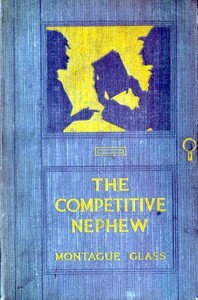
The source record for The Competitive Nephew — Context and Discussion measures this digital text at 80,836 words, 5 hr 52 min estimated reading time, and 9 detected text sections.
The text analysis averages about 14.4 words per sentence, while the detected sections provide another way to judge how the source is divided.
Project Gutenberg metadata also associates the work with “Short stories,” connecting these edition facts with the source record’s subject description.
Explore this collection
These alternatives are selected using recorded categories and estimated reading time.
About 303 minutes
Adventure Picaresque Fiction
69,682 recorded words. 49 minutes difference from this book's estimate.
View Gutenberg source #4020About 293 minutes
Adventure Picaresque Fiction
67,284 recorded words. 59 minutes difference from this book's estimate.
View Gutenberg source #29764About 232 minutes
Adventure Picaresque Fiction
53,156 recorded words. 120 minutes difference from this book's estimate.
View Gutenberg source #74708Search stored excerpts and compare books → Choose by your preferences →
Choices use stored catalog measurements. Estimates vary with reading speed. A shared category is a catalog label, not a claim that two books have the same argument or literary quality.
Search reads excerpt text stored with this catalog and links to its associated Gutenberg record. The connection is stored in the site database; this tool does not recheck that every excerpt is word-for-word identical to that external record. Excerpt search does not cover every chapter and does not verify historical publication dates.
Catalog snapshot checked: 2026-09-25. Coverage: 91 public books, 91 available source excerpts.
Read the complete public-domain text at its original source.
Read on Project GutenbergThe Competitive Nephew opens with a complaint: Sam Zaretsky laments that a bookkeeper and designer have left to start their own firm, taking customers. His partner Max Fatkin nods, recalling their own start. The dialogue, rendered in dialect, immediately establishes a world where loyalty is provisional and every employee is a potential competitor. The partners worry about losing Aaron Pinsky, a customer Sam saw on the subway—a detail that grounds the story in the rhythms of New York's garment trade.
This is not a world of grand ambitions but of daily skirmishes over accounts and patterns. The title story's nephew, we learn from the frontispiece caption, marries his boss's relation and gets three hundred dollars—a transaction that encapsulates the collection's blend of business and family.
The dialogue in these excerpts is rendered in a distinctive dialect that signals both ethnicity and class. Sam Zaretsky says, “You raise a couple of young fellers up in your business, Max, and so soon they know all you could teach 'em they turn around and go to work and do you every time.” The syntax—dropping articles, using “so soon” for “as soon as,” and the colloquial “do you” for “cheat you”—marks the speech as Yiddish-inflected English. This is not merely decorative; it conveys the characters' backgrounds and their milieu in the New York cloak-and-suit trade.
Later, Mr. Zwiebel tells Mr. Levy, “I ain't a begger, neither, y'understand. You should ask anybody in the cigar business, Mr. Levy, and they will tell you I am pretty well fixed already.” The dialect is consistent across characters, creating a cohesive linguistic world. Readers should attend to how Glass uses these speech patterns to establish social standing, humor, and the tension between old-world habits and American commerce.
In the excerpt from later in the collection, Mr. Zwiebel seeks a partner for his son Milton—not a business partner but a wife: Clara Levy. He tells her father, “That's the partner I mean. That boy loves that girl of yours, Mr. Levy, and certainly he ought to love her, because she done a whole lot for that boy.” The negotiation proceeds like a merger: Zwiebel offers to provide for the boy, Levy promises a trousseau “like a queen should wear it” and a wedding with champagne. The language of partnership and investment pervades the romance.
When Milton and Clara finally sit together, they discuss credit information, loose-leaf ledgers, and store fixtures instead of billing and cooing. Clara insists, “credit information shouldn't be entered on cards. It ought to be placed in an envelope and indexed on a card index.” Milton kisses her hand but asks about ledgers. Glass undercuts the sentimental scene with practical business talk, suggesting that in this world, love and commerce are inseparable.
Across the excerpts, a pattern emerges: characters constantly assess trustworthiness. The opening story hinges on a bookkeeper and designer who “go as partners together” and steal trade. Later, Zwiebel wants a partner who will “keep [Milton] straight.” The word “partner” appears in both commercial and marital contexts, blurring the line. Even the title, The Competitive Nephew, hints at familial rivalry in business.
The catalog subjects confirm this focus: “Jews — New York (State) — New York — Fiction” and “Clothing trade — New York (State) — New York — Fiction.” Glass repeatedly returns to the garment industry as a setting where family ties and business deals intertwine. Readers should note how characters use family connections to secure advantages, yet also fear betrayal by those same relatives. The competitive nephew is both a threat and an opportunity.
The table of contents lists ten chapters with titles like “The Competitive Nephew,” “Opportunity,” and “The Sorrows of Seiden.” Each chapter appears to be a self-contained story, yet recurring character names—Zaretsky, Fatkin, Zwiebel—suggest a shared universe. The front matter includes a list of “Books by the Same Author,” including Potash and Perlmutter, indicating Glass wrote other works in this vein.
Readers approaching the book should treat each chapter as a standalone narrative that nevertheless builds a cumulative portrait of a community. The excerpts show no overarching plot but rather a series of episodes centered on business deals, family negotiations, and romantic entanglements. The humor arises from the characters' single-minded focus on commerce, even in personal matters. The collection rewards reading in order, as names and situations echo across stories.
Montague Glass's stories are best approached as comic vignettes of a specific time and place: New York's Jewish garment district in the early 1900s. The humor is dry, the dialogue sharp, and the characters never forget the bottom line. Readers who enjoy dialect-driven comedy and period detail will find much to savor. Let the stories unfold without expecting a novel's arc; each chapter offers a complete, often ironic, episode.
That gray afternoon, the shopkeepers’ bickering in The Competitive Nephew felt almost cozy, their sharp edges softened by rain against my window. Their wary partnership reminded me of another old friend’s voice, wry and forgiving. By evening I’d pulled down my father’s copy of Little Masterpieces of American Wit and Humor, Volume I — Text and Context, and the laugh was quieter, but just as warm.
Build a private reading journal entry for this title.