About 130 minutes
Uncle Tweazy and his quizzical neighbours, vol. 1 of 3 — Story, Setting & Ideas
Historical Psychological Social Fiction
29,894 recorded words. 1 minutes difference from this book's estimate.
View Gutenberg source #77997
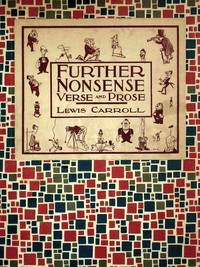
The source record for Further nonsense verse and prose — Text and Context measures this digital text at 29,636 words, 2 hr 9 min estimated reading time, and 38 detected text sections.
The text analysis averages about 24.3 words per sentence, while the detected sections provide another way to judge how the source is divided.
Project Gutenberg metadata also associates the work with “Humorous stories, English,” connecting these edition facts with the source record’s subject description.
Explore this collection
These alternatives are selected using recorded categories and estimated reading time.
About 130 minutes
Historical Psychological Social Fiction
29,894 recorded words. 1 minutes difference from this book's estimate.
View Gutenberg source #77997About 127 minutes
Historical Psychological Social Fiction
29,177 recorded words. 2 minutes difference from this book's estimate.
View Gutenberg source #77028About 124 minutes
Historical Psychological Social Fiction
28,466 recorded words. 5 minutes difference from this book's estimate.
View Gutenberg source #19829Search stored excerpts and compare books → Choose by your preferences →
Choices use stored catalog measurements. Estimates vary with reading speed. A shared category is a catalog label, not a claim that two books have the same argument or literary quality.
Search reads excerpt text stored with this catalog and links to its associated Gutenberg record. The connection is stored in the site database; this tool does not recheck that every excerpt is word-for-word identical to that external record. Excerpt search does not cover every chapter and does not verify historical publication dates.
Catalog snapshot checked: 2026-09-25. Coverage: 91 public books, 91 available source excerpts.
Read the complete public-domain text at its original source.
Read on Project GutenbergLangford Reed's 1926 collection Further Nonsense Verse and Prose brings together pieces that had not previously appeared in book form, drawing on over 150 letters and early publications. The volume includes parodies, acrostics, and the mock-heroic narrative 'Wilhelm von Schmitz,' which occupies several chapters. Reed's foreword positions Carroll as the 'King of Nonsense Literature,' but the excerpts show a writer equally invested in wordplay, legal satire, and self-conscious literary parody.
The extended poem 'Wilhelm von Schmitz' demonstrates Carroll's fondness for exaggerated alliteration and metrical play. In one passage, the poet mutters 'death—saith—breath' before producing lines like 'Whirled by its fiery breath' and 'was doomed to watery death,' then congratulates himself on the 'Coleridge's principle of alliteration' with 'W. D., W. D.' The self-mocking tone is typical: the poet is immediately arrested on suspicion of murder. The narrative also includes a waiter's subterranean soliloquy and a series of stanzas addressed to 'Sukie,' mixing sentimental cliché with absurd plot twists. The humor derives from the gap between the poet's high-flown language and the mundane, chaotic events that follow.
Several prose pieces in the collection parody legal and social conventions. In 'Wilhelm von Schmitz,' the poet is 'collared by two men from behind' and told 'what you say will be used in evidence against you,' a direct echo of police caution. The character Muggle interrupts the poet's recitation to accuse him of drowning a waiter, leading to a farcical interrogation. The narrator archly notes that 'to record with rigid accuracy the progress of events is the sole duty of the historian,' a mock-heroic stance that undercuts the drama. Other pieces, such as 'Hints for Etiquette; or, Dining Out Made Easy' and 'On Waiters,' likely extend this vein of social observation, though the excerpts do not include them.
The table of contents lists 'Acrostics' and 'Rhymed Correspondence,' indicating Carroll's interest in constrained forms. The excerpts do not include these pieces, but the foreword notes that many letters to child friends were examined, suggesting that the acrostics may have been originally composed for specific recipients. The collection also includes 'A Lesson in Latin' and 'Poetry for the Million,' titles that hint at parody of educational and popular verse. The inclusion of 'The Mouse's Tail' (a typographic poem from Alice's Adventures in Wonderland) reinforces the volume's emphasis on visual and verbal ingenuity. Readers familiar with Carroll's longer works will recognize his signature blend of logic and absurdity in these shorter forms.
Because the excerpts are drawn from only a portion of the collection, readers should approach the full text with an eye for how Carroll's nonsense operates as both entertainment and critique. The pieces reward attention to meter, puns, and the tension between formal structure and chaotic content. Reed's editorial choices—including the selection of letters and early newspaper publications—shape the portrait of Carroll as a writer of occasional, often ephemeral, humor.
There’s a particular ache in watching Carroll’s wordplay—those swift, private jokes meant for a friend’s ear—knowing how much context we’ve since lost. I felt that again in the rowdy, teeming streets of The True History of Tom & Jerry or, The Day and Night Scenes, of Life in London from the Start to the Finish! — A Closer Reading, where every slangy aside once needed its own translator. Time makes us outsiders.
A brief reflection can help important ideas stay with you longer.