About 196 minutes
Masterpieces of American Wit and Humor — Story, Setting & Ideas
Science Fiction Utopias
44,923 recorded words. 8 minutes difference from this book's estimate.
View Gutenberg source #6313
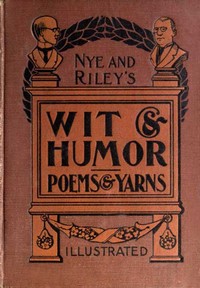
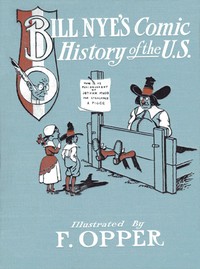
The source record for Nye and Riley's Wit and Humor (Poems and Yarns) — Edition Insights measures this digital text at 46,708 words, 3 hr 24 min estimated reading time, and 8 detected text sections.
The text analysis averages about 23.3 words per sentence, while the detected sections provide another way to judge how the source is divided.
Project Gutenberg metadata also associates the work with “American wit and humor,” connecting these edition facts with the source record’s subject description.
Explore this collection
These alternatives are selected using recorded categories and estimated reading time.
About 196 minutes
Science Fiction Utopias
44,923 recorded words. 8 minutes difference from this book's estimate.
View Gutenberg source #6313About 212 minutes
Science Fiction Utopias
48,685 recorded words. 8 minutes difference from this book's estimate.
View Gutenberg source #54880About 238 minutes
Science Fiction Utopias
54,718 recorded words. 34 minutes difference from this book's estimate.
View Gutenberg source #18934Search stored excerpts and compare books → Choose by your preferences →
Choices use stored catalog measurements. Estimates vary with reading speed. A shared category is a catalog label, not a claim that two books have the same argument or literary quality.
Search reads excerpt text stored with this catalog and links to its associated Gutenberg record. The connection is stored in the site database; this tool does not recheck that every excerpt is word-for-word identical to that external record. Excerpt search does not cover every chapter and does not verify historical publication dates.
Catalog snapshot checked: 2026-09-25. Coverage: 91 public books, 91 available source excerpts.
Read the complete public-domain text at its original source.
Read on Project GutenbergThe volume pairs two distinct comic voices: Bill Nye's deadpan autobiographical sketches and James Whitcomb Riley's dialect poems. Nye's prose often opens with a mundane predicament—a cold office, a lack of postage—then escalates through understatement. Riley's verse, by contrast, relies on rhythmic repetition and sentimental detail, as in "That Night" where "the violin weaving the waltzers a story" enmeshes dancers in sound. The collection's structure alternates between these modes, creating a rhythm of deflation and lyricism.
Nye frequently presents himself as a hapless figure: a justice of the peace in a "miserable little booth" with "numb fingers," unable to mail letters for lack of postage. His humor arises from the gap between his official title and his actual circumstances. In a letter to a railroad executive, he offers himself for "any light employment" without "too much perspiration," undercutting his own dignity. This persona recurs across the yarns, creating a consistent narrative voice that treats failure as a matter-of-fact comedy.
Riley's poems shift to a more ornate register. "That Night" uses sensory overload—"perfume and glory," "scent of the locusts," "crystal, moon-smitten mists"—to evoke a romantic scene, then punctures it with the final line: "My rival who found us, and waltzed you away." The poem's structure mirrors a waltz, with enjambed lines and a refrain-like repetition of "forever." These lyric interludes provide emotional contrast to Nye's prose, though both share a tendency toward ironic closure.
Both authors dwell on physical discomfort. Nye describes himself as "the hot-bed of twenty-one Early Rose boils," calling the situation "extremely humorous without being funny." Riley's poem "The Truth about Methuselah" treats the patriarch's longevity as a series of domestic mishaps: Enoch dies from swimming before the ice breaks, and Methuselah takes up tobacco after becoming an orphan at 365. The humor derives from applying mundane logic to biblical scale—a pattern of deflating the grand through the trivial.
Nye's pieces are predominantly first-person, often framed as letters or memoirs, which lends immediacy to his self-mockery. Riley's poems, while also first-person in lyric mode, shift to third-person for narrative poems like "Methuselah," where the doctor scolds the deceased: "He sneered at me and alluded to me as a fresh young gosling." This alternation between intimate confession and detached tall tale gives the collection a varied pacing, though the excerpts are too brief to confirm whether this pattern holds throughout.
Both authors rely on the reader to recognize the gap between stated and implied meaning. Nye's claim that he "scarcely cared through the livelong day whether school kept or not" invites the reader to infer his indifference to factual accuracy. Riley's description of Methuselah's grief—"wild, passionate grief over the loss of his father"—is undercut by the absurd age. The humor is collaborative: the text provides the setup, and the reader supplies the ironic frame.
Readers may find it useful to read the prose and poetry in sequence, noting how Nye's deadpan realism and Riley's sentimental lyricism comment on each other. The collection's humor often depends on the juxtaposition of high-flown language with lowly subjects—a technique that rewards attention to shifts in tone and register. The excerpts suggest a deliberate structure, but the full book may reveal additional patterns of contrast and repetition.
I remember sitting on my grandmother’s porch, turning pages of a cheap anthology, and feeling the odd ache behind Riley’s funny rhymes—the way laughter can sit right next to loneliness. That same hush came over me with The Idiot — Story, Setting & Ideas, where the comic mask never quite hides the bewildered heart underneath. Some books simply remember that for you.
Your answers remain private and are stored only in this browser.