About 238 minutes
My Lady Nicotine: A Study in Smoke — A Closer Reading
Science Fiction Utopias
54,718 recorded words. 16 minutes difference from this book's estimate.
View Gutenberg source #18934
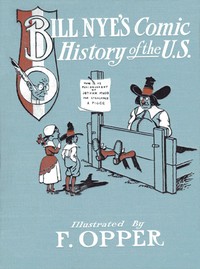
The source record for Comic History of the United States — Themes and Context measures this digital text at 58,365 words, 4 hr 14 min estimated reading time, and 9 detected text sections.
The text analysis averages about 21.4 words per sentence, while the detected sections provide another way to judge how the source is divided.
Project Gutenberg metadata also associates the work with “American wit and humor,” connecting these edition facts with the source record’s subject description.
Explore this collection
These alternatives are selected using recorded categories and estimated reading time.
About 238 minutes
Science Fiction Utopias
54,718 recorded words. 16 minutes difference from this book's estimate.
View Gutenberg source #18934About 212 minutes
Science Fiction Utopias
48,685 recorded words. 42 minutes difference from this book's estimate.
View Gutenberg source #54880About 297 minutes
Science Fiction Utopias
68,116 recorded words. 43 minutes difference from this book's estimate.
View Gutenberg source #75030Search stored excerpts and compare books → Choose by your preferences →
Choices use stored catalog measurements. Estimates vary with reading speed. A shared category is a catalog label, not a claim that two books have the same argument or literary quality.
Search reads excerpt text stored with this catalog and links to its associated Gutenberg record. The connection is stored in the site database; this tool does not recheck that every excerpt is word-for-word identical to that external record. Excerpt search does not cover every chapter and does not verify historical publication dates.
Catalog snapshot checked: 2026-09-25. Coverage: 91 public books, 91 available source excerpts.
Read the complete public-domain text at its original source.
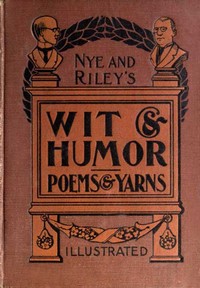
Read on Project GutenbergBill Nye's preface sets an unusual contract with the reader: facts are the 'framework, not the drapery' of history, and the author and illustrator aim to 'humanize our history' by dressing those facts in 'sweet persuasive language' and embellishment. The result is a narrative that treats the cherry-tree legend as a transaction—George's father empties the boy's toy bank in payment—and describes Cornwallis's surrender as 'the most artistic capitulation he had ever given.' The text is punctuated by Opper's cartoons, which extend the humor visually.
Nye opens with a striking metaphor: facts in a 'nude state' are like 'bright and beautiful children' who commit no felony by being born naked, but it is the duty of those in charge to put 'appropriate, healthful, and even attractive apparel upon them.' This is not a throwaway joke but a deliberate statement of method. The author and artist claim to respect facts—'We have never, either of us, said an unkind word regarding facts'—yet they insist that facts should not be placed before the public 'exactly as they were born.' Instead, they are to be 'embellished and beautified.' The preface thus positions the book as a corrective to dry, 'nude' history, offering instead a version that is 'fluted, embossed, embroidered, and embellished.' This framing is essential for understanding the liberties taken in the chapters that follow.
The excerpt covering the Southern campaign and Yorktown reveals Nye's characteristic blend of anachronistic language and understated absurdity. Cornwallis, after Guilford Court-House, 'went back to Washington on a Bull Run schedule, without pausing even for feed or water.' The coat he wore at the time, now in the Smithsonian, 'shows distinctly the marks made where the Colonists played checkers on the tail.' Arnold's brutality is described as killing people 'who were strangers to him, and who had never harmed him, not knowing him, as the historian says, from "Adam's off ox."' The siege of Yorktown is met with the deadpan line: 'The most hearty good will prevailed. What more could you expect of a siege than that?' These moments show Nye treating the war not as solemn tragedy but as a series of absurd scenes, while still conveying the sequence of events.
Frederick Burr Opper's illustrations are integral to the comic effect, as the preface emphasizes the partnership of 'the artist and the author.' In the Yorktown section, the caption 'Cornwallis Sending His Sword by General O'Hara' accompanies a cartoon that presumably visualizes the moment. Earlier, the cherry-tree anecdote is paired with an illustration titled 'George's Father Taking Pay for the Cherry-Trees,' showing the father emptying George's toy bank. The text and image together undercut the moralizing tone of the traditional story: George's honesty is rewarded not with praise but with a financial penalty. The book's structure—chapters with titles like 'Drawbacks of Being a Colonist' and 'The Episode of the Charter Oak'—further signals that the humor is not merely in the telling but in the selection and framing of historical episodes.
Readers should approach this book as a deliberate hybrid: a factual skeleton clothed in comic invention. Nye and Opper do not aim to replace standard histories but to offer a parallel version where the cherry-tree legend ends with a emptied bank and Cornwallis's coat becomes a checkerboard. The humor is often dry, the anachronisms pointed, and the illustrations essential. To appreciate the work, watch for the tension between the 'impregnable truths' Nye claims to respect and the embellishments he applies—and note how the cartoons extend or subvert the text's jokes.
Reading these comic histories, I remember my father chuckling over old joke books by the fire. It’s the same gentle, knowing warmth I found in Maw's Vacation: The Story of a Human Being in the Yellowstone — Reading Notes, where the absurdity of travel feels oddly human. Both nudge familiar figures into something kinder, less distant.
Save your reaction, strongest insight, and memorable passage.