About 59 minutes
Maw's Vacation: The Story of a Human Being in the Yellowstone — Reading Notes
Science Fiction Utopias
13,492 recorded words. 20 minutes difference from this book's estimate.
View Gutenberg source #24126
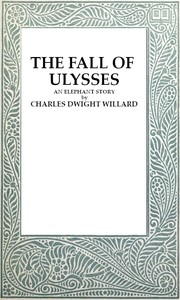
The Fall of Ulysses: An Elephant Story — Context and Discussion can be approached with a clearer sense of reading commitment from its source measurements: 8,967 words, 39 min estimated reading time, and 3 detected text sections.
The text analysis averages about 22.1 words per sentence, while the detected sections provide another way to judge how the source is divided.
Project Gutenberg metadata also associates the work with “Humorous stories,” connecting these edition facts with the source record’s subject description.
Explore this collection
These alternatives are selected using recorded categories and estimated reading time.
About 59 minutes
Science Fiction Utopias
13,492 recorded words. 20 minutes difference from this book's estimate.
View Gutenberg source #24126About 62 minutes
Science Fiction Utopias
14,242 recorded words. 23 minutes difference from this book's estimate.
View Gutenberg source #44219About 95 minutes
Science Fiction Utopias
21,841 recorded words. 56 minutes difference from this book's estimate.
View Gutenberg source #37166Search stored excerpts and compare books → Choose by your preferences →
Choices use stored catalog measurements. Estimates vary with reading speed. A shared category is a catalog label, not a claim that two books have the same argument or literary quality.
Search reads excerpt text stored with this catalog and links to its associated Gutenberg record. The connection is stored in the site database; this tool does not recheck that every excerpt is word-for-word identical to that external record. Excerpt search does not cover every chapter and does not verify historical publication dates.
Catalog snapshot checked: 2026-09-25. Coverage: 91 public books, 91 available source excerpts.
Read the complete public-domain text at its original source.
Read on Project GutenbergThe narrator opens with a frank admission of blame for the calamity that befell Ulysses, immediately establishing a confessional tone. He distinguishes his elephant as a real, not metaphorical, burden—a genuine Asiatic elephant whose intellectual monstrosity he, like Frankenstein, created. The story begins in Madras, where the narrator purchases Ulysses through a half-breed trainer named Jerry Rhahob, setting the stage for a tale that pivots on education and its unforeseen consequences.
The narrator’s acquisition of Ulysses is mediated by Jerry Rhahob, a half-breed elephant trainer whose expertise in Madras government yards is established. The narrator’s ambition is clear: he intends to teach the elephant “all that an elephant can be made to learn.” Jerry’s cryptic reply—“You will not have time to do that”—hints at the trouble ahead. The purchase itself is handled through “complicated negotiations,” suggesting the narrator’s remove from the practicalities of elephant ownership. This opening section establishes the narrator as a man of schemes rather than hands-on experience, a trait that will prove critical.
Ulysses’s challenge arrives as a written manifesto on a blackboard, a device that underscores his acquired literacy and logical rigor. He questions the narrator’s intellectual superiority by cataloging specific gaps in knowledge: Henry Mackenzie’s novels, Bishop Berkeley’s Alciphron, and the reason Henry Vaughan was called “the Silurist.” The elephant demands a reversal of roles, proposing himself as master. The narrator’s response is not to argue but to devise a trap, introducing a book as the “last and severest test” of culture. Ulysses’s monocle and chalk writing are recurring visual details that mark his transformation from beast to critic.
The narrator presents a book he brought from Madras, one Ulysses has not seen. The elephant reads with a monocle, breathing hard and swaying as he struggles. He asks whether the text should be read “backwards or sideways,” revealing his confusion. The narrator watches from a hammock, confident in his deception. The test hinges on Ulysses’s inability to comprehend a work that the narrator knows is deliberately obscure. The passage highlights the narrator’s cunning and the elephant’s earnest but doomed effort, building toward the inevitable failure.
Though the excerpts cut off before the resolution, the narrator’s opening confession that he “furnished the unfortunate creature the cause for his desperation” and felt relief when Ulysses accepted a means of escape suggests the test leads to a crisis. The narrator’s plan to “beat Ulysses at his own game” succeeds, but the cost is the elephant’s desperation. The story’s structure—framed by the narrator’s retrospective guilt—invites readers to consider the ethics of intellectual manipulation. The recurring image of the blackboard and chalk serves as a tangible link between the elephant’s acquired knowledge and his ultimate downfall.
Readers should attend to the way the narrator’s voice shifts between self-deprecation and pride, and how the elephant’s logical demands mirror the narrator’s own pedagogical ambitions. The story’s brevity—under 9,000 words—belies its layered treatment of mastery, education, and the limits of reason. The illustrations by Frank Ver Beck, though not reproduced here, likely amplify the comic and ironic contrasts between the elephant’s dignity and his predicament.
The rain drummed on the window while Ulysses’s quiet challenge lingered in my mind—that strange, unsettling moment when the elephant asked for fairness. Afterward, I sat thinking about inheritance, about what we pass down without noticing. That’s when I pulled The Amazing Inheritance — Reading Companion from the shelf, almost by instinct, and let its gentle notes carry the afternoon somewhere softer.
Use these questions to collect your thoughts before moving on.