About 54 minutes
Scrambled eggs — Background and Themes
Fantasy Juvenile Worlds
12,341 recorded words. 3 minutes difference from this book's estimate.
View Gutenberg source #74733
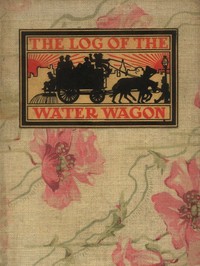
The source record for The Log of the Water Wagon; or, The Cruise of the Good Ship "Lithia" — Story, Setting & Ideas measures this digital text at 11,730 words, 51 min estimated reading time, and 3 detected text sections.
The text analysis averages about 17.0 words per sentence, while the detected sections provide another way to judge how the source is divided.
Project Gutenberg metadata also associates the work with “American wit and humor,” connecting these edition facts with the source record’s subject description.
Explore this collection
These alternatives are selected using recorded categories and estimated reading time.
About 54 minutes
Fantasy Juvenile Worlds
12,341 recorded words. 3 minutes difference from this book's estimate.
View Gutenberg source #74733About 57 minutes
Fantasy Juvenile Worlds
12,982 recorded words. 6 minutes difference from this book's estimate.
View Gutenberg source #33918About 37 minutes
Fantasy Juvenile Worlds
8,432 recorded words. 14 minutes difference from this book's estimate.
View Gutenberg source #23619Search stored excerpts and compare books → Choose by your preferences →
Choices use stored catalog measurements. Estimates vary with reading speed. A shared category is a catalog label, not a claim that two books have the same argument or literary quality.
Search reads excerpt text stored with this catalog and links to its associated Gutenberg record. The connection is stored in the site database; this tool does not recheck that every excerpt is word-for-word identical to that external record. Excerpt search does not cover every chapter and does not verify historical publication dates.
Catalog snapshot checked: 2026-09-25. Coverage: 91 public books, 91 available source excerpts.
Read the complete public-domain text at its original source.
Read on Project GutenbergThe Log of the Water Wagon opens with a mock-heroic dedication to survivors of the good ship Lithia, who have 'rounded the Horn and passed through perilous Beering Straits'—a pun that sets the tone for the entire work. The editors claim to have compiled the log from notes found in a floating milk-bottle, pencilled on the backs of 'blank temperance pledges, I O U’s, and wine-lists.' This framing device establishes the book as a sustained joke, blending temperance rhetoric with nautical adventure and vaudeville humor.
The authors, Bert Leston Taylor and W.C. Gibson, sustain the conceit through a series of dated log entries, each mixing shipboard routine with absurdist commentary on contemporary figures and fads. The prose is dense with wordplay, allusions to popular culture, and a knowing wink at the reader.
The central conceit—that a temperance pledge is a voyage aboard the 'Water Wagon'—allows the authors to generate a steady stream of nautical puns. The ship itself is named Lithia, a reference to a brand of lithia water marketed as a temperance drink. The log records 'perilous Beering Straits,' 'choking dust-storms,' and a 'fearful simoom off White Rock Point,' each phrase mapping a real or imagined hazard of sobriety onto maritime danger. The dedication addresses those who have 'clung to the slippery hull of the Water Wagon' and 'heard the cafe Lorelei sing,' conflating the sirens of myth with the temptations of the bar. This extended metaphor is not merely decorative; it structures the entire narrative, turning every setback into a storm and every relapse into a shipwreck.
The log entries mix mock-heroic reportage with absurdist details. On the fifth day, the sun 'rose half an hour late,' and the ship's wag suggests 'Old Sol’s safety-razor must have been out of whack'—a joke that earns him a belting with tarred rope and seven stitches. The authors weave in contemporary references: Tom Lawson, the pilot, brings aboard a 'magazine-gun' and is described as knowing 'the depth of water at every point in the dangerous channel of Wall Street.' The smoking-room is 'very dull' except for a game of tiddlywinks and a reformed Scotch barkeep playing 'Comin’ Through the Rye' on the cash register. These details ground the fantasy in a recognizable world of 1905 humor, where financial speculation and temperance reform are equally ripe for satire.
A standout section is the twelve-stanza poem 'Omar on the Wagon,' a parody of Edward FitzGerald's Rubáiyát of Omar Khayyám. The poem adapts the original's carpe-diem philosophy to a temperance theme: 'Before the last hour of the Old Year died, / Methought a voice without the Tavern cried: / “Oh, cut it out, Khayyam; there’s nothing in’t. / The Water Wagon waits you. Take a ride!”' The quatrains follow the original's rhyme scheme and meter, substituting 'Aqua' for wine and 'the Grape' for the grape. The speaker swears off drink, only to be 'jolted off into a Liquor Store' when the wagon bumps the curb. The final stanza instructs readers to 'turn down an empty Glass' at the place where the speaker once made one. This parody is the book's most sustained literary joke, requiring familiarity with both the source text and the temperance movement.
The log-keeper's voice is a deliberate pastiche of nautical jargon, newspaper reportage, and vaudeville patter. The prose shifts between formal log entries—'Shortly before noon we picked up the Stock Exchange light'—and colloquial asides: 'Nothing doing but a game of tiddlywinks on the O. P. side.' The editors' note describes the original notes as 'pencilled in a trembling hand' and 'barely legible, testifying to the fearful condition of the unknown writer’s tongue.' This detail suggests the log-keeper may be suffering from the very thirst he has pledged to resist, adding a layer of dramatic irony. The inclusion of 'sundry moral reflections upon life, liberty, and the pursuit of happiness' hints at a satirical treatment of American optimism, though the excerpts are too brief to confirm a sustained critique.
Readers should approach The Log of the Water Wagon as a period piece of American humor, best appreciated for its linguistic play and its willingness to mock both temperance crusaders and their opponents. The book rewards attention to its puns, parodies, and topical allusions, many of which reference figures and products obscure today. The log format invites dipping in and out, but the cumulative effect depends on following the voyage from departure to the hinted-at shipwreck.
Reading this log’s playful solemnity—the way its crew crowns water with mock ceremony—I remembered sitting with my grandfather, who once jokingly kept a diary of his own sobriety. That same half-smile returned with the earnest absurdity of The Monikins — Themes and Context, whose talking animals mirror our foibles so tenderly. Both books make virtue feel like a private, gentle joke.
Capture what you thought, learned, and would like to remember.