About 57 minutes
Mr. Punch with the Children — Edition Insights
Fantasy Juvenile Worlds
12,982 recorded words. 34 minutes difference from this book's estimate.
View Gutenberg source #33918
For The Swoop! or, How Clarence Saved England: A Tale of the Great Invasion — Background and Themes, the stored edition analysis reports 20,918 words, 1 hr 31 min estimated reading time, and 3 detected text sections.
The text analysis averages about 13.4 words per sentence, while the detected sections provide another way to judge how the source is divided.
Project Gutenberg metadata also associates the work with “Satire,” connecting these edition facts with the source record’s subject description.
Explore this collection
These alternatives are selected using recorded categories and estimated reading time.
About 57 minutes
Fantasy Juvenile Worlds
12,982 recorded words. 34 minutes difference from this book's estimate.
View Gutenberg source #33918About 54 minutes
Fantasy Juvenile Worlds
12,341 recorded words. 37 minutes difference from this book's estimate.
View Gutenberg source #74733About 51 minutes
Fantasy Juvenile Worlds
11,730 recorded words. 40 minutes difference from this book's estimate.
View Gutenberg source #60022Search stored excerpts and compare books → Choose by your preferences →
Choices use stored catalog measurements. Estimates vary with reading speed. A shared category is a catalog label, not a claim that two books have the same argument or literary quality.
Search reads excerpt text stored with this catalog and links to its associated Gutenberg record. The connection is stored in the site database; this tool does not recheck that every excerpt is word-for-word identical to that external record. Excerpt search does not cover every chapter and does not verify historical publication dates.
Catalog snapshot checked: 2026-09-25. Coverage: 91 public books, 91 available source excerpts.
Read the complete public-domain text at its original source.
Read on Project GutenbergFrom its opening sentence—'August the First, 19—'—P.G. Wodehouse's The Swoop! announces itself as a parody of the invasion-scare genre that flourished in Edwardian England. The novel's structure mirrors that of contemporary alarmist fiction, complete with a mock-serious preface claiming patriotic duty, but the content undercuts every convention. The hero, Clarence Chugwater, is introduced not with martial bearing but as a Boy Scout laden with 'a flat-brimmed hat, a coloured handkerchief, a flannel shirt, a bunch of ribbons, a haversack, football shorts, brown boots, a whistle, and a hockey-stick.' This inventory of scouting paraphernalia establishes the book's method: treating the mundane details of organized boyhood as if they were the stuff of epic.
The novel's first part follows a conventional invasion narrative—enemy armies land, England is overrun—but Wodehouse populates the crisis with absurd details. The German, Russian, and other invading generals are revealed to be music-hall performers, their campaigns press-agented and their salaries negotiated by a theatrical agent. The structure of Part One, with chapter titles like 'The Bombardment of London' and 'A Conference of the Powers,' promises high drama, yet the actual bombardment is reported via a newspaper paragraph noting that 'the damage to property was not great.' Wodehouse sustains this gap between expectation and reality by juxtaposing the language of military dispatches with trivial asides: the invaders' 'ultimatum' is delivered alongside complaints about the weather. The effect is a steady deflation of heroic postures, achieved not through overt mockery but through the relentless application of bureaucratic and commercial logic to martial affairs.
Clarence Chugwater embodies the Boy Scout ideal of constant readiness, but Wodehouse renders that ideal comically literal. The narrator notes that Clarence 'could low like a bull' and 'gurgle like a'—the sentence breaks off, as if the list of scouting skills is too exhaustive to complete. His dialogue is a tissue of scout jargon and formal address: he promotes subordinates on the spot ('Private—no, Corporal Biggs') and conducts intelligence-gathering over 'sparkling limado' in a tea shop. The secret password 'Siquand' (a variant of the scout sign) is treated with the gravity of a state secret, yet its effect is to admit Clarence to the office of a trade paper. Wodehouse repeatedly places the vocabulary of scouting—'Pip-pip!', 'Toodleoo and God save the King!'—into contexts of national emergency, creating a persistent mismatch between the gravity of the situation and the triviality of the response. This linguistic play is the book's primary structural device: each crisis is met with a ritualized scout procedure, and the rituals never quite fit.
The novel shuttles between two kinds of setting: the public realm of invasion (battlefields, bombarded cities, conferences of generals) and the private, institutional spaces where Clarence operates (a tea shop, a newspaper office, a Boy Scout camp). Part One moves from Clarence's home to the invaders' camp to London streets, but the pivotal action occurs in the 'offices of the Encore in Wellington Street,' where Clarence gains access by giving 'the Scout's Siquand, the pass-word.' Part Two is set largely in the Boy Scouts' camp, a space that mirrors the adult world of command but reduces it to adolescent scale. The 'great battle' of the climax is fought not on a named field but in a location that remains vague, as if the geography of the conflict matters less than the social dynamics among the scouts. Wodehouse uses these shifts in setting to suggest that the real 'invasion' is not of England by foreign armies but of adult institutions by the logic of organized boyhood.
Throughout the excerpts, food and drink appear at moments of high tension. The scout meeting in the tea shop involves 'sparkling limado' and 'a bath-bun'; the generals' salaries are discussed in terms of 'drawing five hundred of the best'; and the invaders' campaign is described as a theatrical booking. These images link consumption to performance: the invasion is a show to be marketed, and the nation's peril is measured in lost revenue. The recurring figure of the 'music-hall agent' Solly Quhayne, who secures engagements for the generals, turns military command into a variety act. Wodehouse extends this metaphor to the narrative voice itself, which adopts the tone of a press agent hyping a product: 'Scan him closely. Do not dismiss him with a passing glance; for you are looking at the Boy of Destiny.' The novel's structure, alternating between scenes of ostensible danger and scenes of bureaucratic or commercial negotiation, reinforces the idea that the invasion is above all a spectacle—one that Clarence, as the ultimate insider, knows how to manage.
Readers approaching The Swoop! should attend to the way Wodehouse uses the scaffolding of a genre—the invasion novel—to construct a satire of Edwardian institutions. The book rewards attention to its structural parallels: the way a scout's whistle replaces a general's command, or how a tea-shop conversation carries the weight of a war council. The excerpts suggest that the novel's comedy depends on the reader's familiarity with both Boy Scout culture and the invasion-scare fiction of the period, but its pleasures are accessible to anyone who enjoys watching a genre taken literally until it collapses into absurdity.
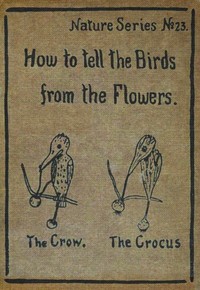
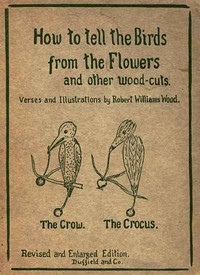
That Wodehouse book stayed with me because it makes mockery feel gentle, not cruel. I found a similar quiet wink in How to tell the Birds from the Flowers, and other Wood-cuts A Revised Manual of Flornithology for Beginners — Themes and Context, where categories blur like a daydream. Both remind me that confusion can be a soft, small comfort.
Use these questions to collect your thoughts before moving on.