About 112 minutes
The Idiot — Story, Setting & Ideas
Science Fiction Utopias
25,699 recorded words. 7 minutes difference from this book's estimate.
View Gutenberg source #18881
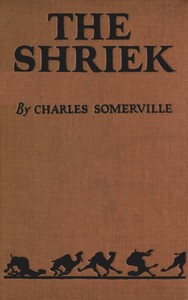
For The Shriek: A Satirical Burlesque — Inside the Classic, the stored edition analysis reports 27,239 words, 1 hr 59 min estimated reading time, and 4 detected text sections.
The text analysis averages about 14.5 words per sentence, while the detected sections provide another way to judge how the source is divided.
Project Gutenberg metadata also associates the work with “Satire,” connecting these edition facts with the source record’s subject description.
Explore this collection
These alternatives are selected using recorded categories and estimated reading time.
About 112 minutes
Science Fiction Utopias
25,699 recorded words. 7 minutes difference from this book's estimate.
View Gutenberg source #18881About 130 minutes
Science Fiction Utopias
29,804 recorded words. 11 minutes difference from this book's estimate.
View Gutenberg source #4249About 107 minutes
Science Fiction Utopias
24,385 recorded words. 12 minutes difference from this book's estimate.
View Gutenberg source #11930Search stored excerpts and compare books → Choose by your preferences →
Choices use stored catalog measurements. Estimates vary with reading speed. A shared category is a catalog label, not a claim that two books have the same argument or literary quality.
Search reads excerpt text stored with this catalog and links to its associated Gutenberg record. The connection is stored in the site database; this tool does not recheck that every excerpt is word-for-word identical to that external record. Excerpt search does not cover every chapter and does not verify historical publication dates.
Catalog snapshot checked: 2026-09-25. Coverage: 91 public books, 91 available source excerpts.
Read the complete public-domain text at its original source.
Read on Project GutenbergThe novel opens with Lady Speedway, a self-appointed social arbiter at the Hotel Biscuit, delivering a torrent of polysyllabic disapproval. She declares the heroine Verbeena Mayonnaise 'impossible' for planning a solo desert crossing, calling the idea 'rhapsodically rancid.' The dialogue immediately establishes the book's method: taking the earnest romantic adventure of E.M. Hull's The Sheik and inflating its language to absurdity. Lady Speedway's speech is a parade of Latinate nouns—'ratiocinations, fulminations, obscurations'—that mock the original's high-flown style while revealing nothing about the plot. The American listener's interjections ('O, me lady!') underscore the parody's reliance on mismatched registers.
Verbeena Mayonnaise is introduced not through her own actions but through others' commentary. Lady Speedway calls her a 'flapper' and 'absurd chit,' while the narrative later reveals that Verbeena's past includes 'swimmin’, rowin’, ridin’, boxin’, runnin’, fightin’, wrestlin’.' This list, rendered in colloquial contractions, parodies the athletic competence of the original heroine. When captured by the Sheik, Verbeena reflects that her 'good, stiff boyish training' has prepared her for the crisis—a line that undercuts the original's earnest self-reliance by making it sound like a schoolgirl's boast. The parody consistently deflates heroic moments by juxtaposing them with mundane details: Verbeena 'conjured up the long, sad face of Lord Tawdry with its sable curtains' as a source of gratitude, mixing romantic cliché with comic bathos.
The Sheik Amut Ben Butler introduces himself with a string of grandiose titles—'Grand Monarch, the Monseigneur of this entire sand-patch'—then undercuts them by demanding his listener 'put that in a cigarette paper and smoke it.' His name itself is a joke, combining a Turkish title with a common American surname. His speech is peppered with anachronistic slang ('cutey,' 'grass-cutter') and absurd threats ('I’ll get up to you'). When Verbeena accuses him of kidnapping for ransom, he retorts that he paid 'eighty-six cents American cash' for her—a deflation of the original's exotic abduction. The Sheik's list of previous captives—'Ayah and Beeyah, Ceeyah and Deeyah'—parodies the serial romance of the source material by turning it into a comic alphabet. His laughter, described as 'ingrainedly and corruscatedly ironic,' is a verbal flourish that mocks the original's intense emotional scenes.
The novel's primary technique is lexical inflation. Lady Speedway's speeches are dense with words like 'expatiation,' 'ratiocinations,' and 'insolubly idiotic,' which serve no narrative purpose except to mock the original's pretension. The narrator frequently inserts parenthetical asides ('Mind you,' 'I hope you observe') that break the fourth wall and undermine any suspense. Dialogue is punctuated by stage directions: 'He gave her a look that was awful sneery.' The parody also targets the original's exoticism by replacing desert mystique with mundane details—the Sheik's turban, a 'brand new, very natty turban' that Verbeena mentions, or the 'cigarette stained' fingers. Even the setting, 'the verge of the tawny Sahara,' is undercut by the Hotel Biscuit, a name that suggests a cookie rather than a grand resort.
The excerpts suggest a rapid alternation between dialogue and narrative summary. Chapter I is almost entirely dialogue, with Lady Speedway's monologue dominating. By Chapter VIII, the narrative shifts to Verbeena's internal thoughts, but these are rendered in a breathless, exclamatory style ('O, golly, golly me!'). The parody does not build tension in the conventional sense; instead, it piles on comic details. The Sheik's revelation that he has had many previous captives is delivered as a list, not a dramatic confession. The book's short chapters (fourteen in total) and the author's own illustrations (mentioned in the title page) suggest a fast-paced, visually playful text. Readers should expect the humor to come from incongruity—between high-flown language and low subject matter, between romantic convention and absurdist detail—rather than from plot development.
Approach The Shriek as a contemporary parody that assumes familiarity with E.M. Hull's The Sheik. The humor depends on recognizing the original's tropes—the abduction, the desert setting, the heroine's defiance—and seeing them exaggerated. The book does not aim for coherence; its pleasure lies in the verbal acrobatics and the sheer density of jokes. Read for the language, not the story.
The rain kept me indoors with The Shriek, its gaudy jabs at desert romance ticking along like a clock. Verbeena’s absurd bravado made me laugh, but something quieter lingered. That unspoken tenderness beneath the parody reminded me of another book’s delicate machinery. Later, I found myself pulling down The Incubator Baby — Text and Context, almost without deciding to. Both dealt in fragile beginnings, though one wore a mask of laughter.
A brief reflection can help important ideas stay with you longer.