Herbert Beeman's Some Adventures of Mr. Surelock Keys (1913) is a Canadian parody of Arthur Conan Doyle's Sherlock Holmes stories, sold to raise funds for a church organ. The narrator, Whenson, mirrors Watson, while the detective Keys delivers absurdly logical deductions—such as explaining that a bullet fired at a moving streetcar took two miles to cross the carriage. The humor relies on deadpan dialogue and local references to Kerrisdale, Eburne, and Steveston, grounding the parody in specific British Columbia geography.
Diction and Deadpan Delivery
Beeman's parody works through precise, understated diction. Keys speaks in cold, formal phrases: "That is a mere vulgar detail, Whenson," he says of a shooting case. The narrator's reactions—"Oh!" and "when I had sufficiently recovered"—underscore the absurdity. In The Adventure of the Irate House-Holder, Keys deduces a visitor is an optimist because "you came in without knocking." The punchline lands because the logic is both flawless and trivial. Beeman avoids slapstick; the humor emerges from the gap between Keys's grand pronouncements and the mundane mysteries.
Voice and Characterization
Keys's voice is a pastiche of Holmes's condescension. He interrupts Whenson's reading, stretches for the gramophone, and dismisses questions as "vulgar." Whenson, in turn, suppresses retorts, noting "even friendship has its limits." The client Joseph Bloggs speaks in colloquial outrage: "the effete electors have chosen to represent them." Beeman gives each character a distinct register—Keys's lofty detachment, Whenson's exasperated loyalty, and clients' vernacular complaints. This vocal contrast drives the comedy, as when Keys dryly observes Bloggs's "drab appearance" after the water-rate complaint.
Structure and Narrative Framing
The collection opens with a title page noting the book was "SOLD IN AID OF THE ORGAN FUND OF ST. MARY'S CHURCH, KERRISDALE." This frames the parody as a community fundraiser. Each adventure begins in medias res, with Whenson and Keys in their "cosy rooms in Butcher Street." The cases are brief—the bullet-through-window puzzle, the water-rate conspiracy—and resolved not by detection but by Keys's verbal one-upmanship. The final story, The Adventure of Mr. Santa Claus, ends with Keys in disguise, "fluff adhering to the front of his coat," a visual gag that undercuts his usual dignity.
Setting and Local Color
Beeman anchors the absurdity in real places: Kerrisdale, Eburne, Steveston, and the "Steveston car" (a streetcar line). The bullet case references the Eburne News and a .22 caliber shot. The water-rate complaint involves the local Council. These details root the parody in early 20th-century British Columbia, making it a regional artifact. The humor assumes familiarity with local transit and politics—the joke about a bullet traveling two miles relies on knowing the streetcar's speed. Readers outside the area may miss nuances, but the specificity gives the parody texture.
Beeman's parodies reward attention to word choice and pacing. The deadpan exchanges between Keys and Whenson, the local references, and the trivial mysteries all serve to mock the detective genre without malice. Readers familiar with Sherlock Holmes will catch the echoes; those new to the originals can still enjoy the absurd logic. The book is best read as a series of quick, witty sketches rather than a sustained narrative.
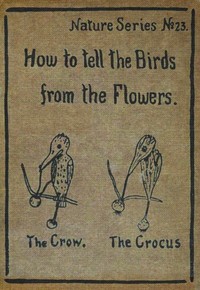
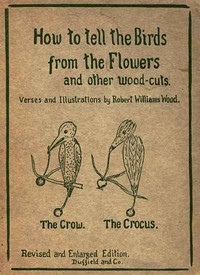
There’s something gentle about spending an evening with Mr. Surelock Keys, how his absurd logic soothes rather than stings. It reminded me of that old quiet feeling I got from How to tell the Birds from the Flowers, and other Wood-cuts A Revised Manual of Flornithology for Beginners — Themes and Context—both wink at their own cleverness without ever raising their voice. Special, how humor can feel so kind.