About 20 minutes
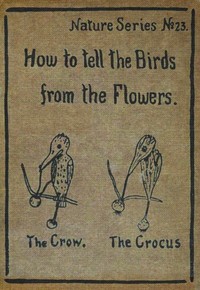
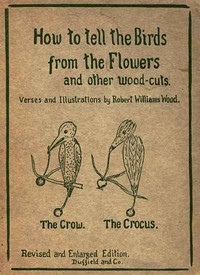
How to Tell the Birds from the Flowers: A Manual of Flornithology for Beginners — Story, Setting & Ideas
Fantasy Juvenile Worlds
4,471 recorded words. 1 minutes difference from this book's estimate.
View Gutenberg source #1593
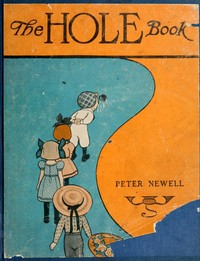
Before opening The Hole Book — Inside the Classic, the edition data offers a quick orientation: 4,259 words, 19 min estimated reading time, and 1 detected text section.
The text analysis averages about 23.5 words per sentence, while the detected sections provide another way to judge how the source is divided.
Project Gutenberg metadata also associates the work with “Stories in rhyme,” connecting these edition facts with the source record’s subject description.
Explore this collection
These alternatives are selected using recorded categories and estimated reading time.
About 20 minutes
Fantasy Juvenile Worlds
4,471 recorded words. 1 minutes difference from this book's estimate.
View Gutenberg source #1593About 20 minutes
Fantasy Juvenile Worlds
4,584 recorded words. 1 minutes difference from this book's estimate.
View Gutenberg source #43013About 25 minutes
Fantasy Juvenile Worlds
5,589 recorded words. 6 minutes difference from this book's estimate.
View Gutenberg source #47368Search stored excerpts and compare books → Choose by your preferences →
Choices use stored catalog measurements. Estimates vary with reading speed. A shared category is a catalog label, not a claim that two books have the same argument or literary quality.
Search reads excerpt text stored with this catalog and links to its associated Gutenberg record. The connection is stored in the site database; this tool does not recheck that every excerpt is word-for-word identical to that external record. Excerpt search does not cover every chapter and does not verify historical publication dates.
Catalog snapshot checked: 2026-09-25. Coverage: 91 public books, 91 available source excerpts.
Read the complete public-domain text at its original source.
Read on Project GutenbergPeter Newell's The Hole Book (1908) is a picture book built around a single, accelerating premise: a bullet fired accidentally by Tom Potts travels through a series of domestic and urban scenes, each page bearing a die-cut hole that marks the bullet's passage. The story is told in rhyming quatrains, with a consistent ABAB scheme and a meter that shifts from a steady ballad rhythm to quicker, more fragmented lines as the chaos mounts. Newell's narrative voice remains matter-of-fact even as events grow absurd, creating a tension between the deadpan delivery and the escalating mayhem.
The poem's meter is predominantly iambic, with alternating lines of four and three stresses—a common ballad form. Early stanzas, such as Tom Potts's mishap, move at a deliberate pace: 'Tom Potts was fooling with a gun / (Such follies should not be).' The parenthetical aside slows the line, mimicking a narrator's wry commentary. As the bullet travels, the rhythm tightens. In the automobile scene, the lines 'A loud explosion followed and / A tremor shook the air!' break the pattern with a spondee ('loud ex-'), quickening the beat. Later, the bullet's impact on the artist's painting is described in clipped phrases: 'The ball of lead this picture smote, / As through the room it ranged.' The verb 'smote' and the enjambment push the reader forward, mirroring the bullet's speed.
Newell's narrator maintains a flat, reportorial tone even as events grow ludicrous. When Granny Fink is drenched with goldfish, the stanza ends with the understated 'And Granny found that she was drenched, / With goldfish in her lap!' The exclamation point is rare; most stanzas close with a period, reinforcing the narrator's calm. Dialogue, when it appears, is rendered in dialect or stiff formality. Old Hagenschmit exclaims, 'Who put dot bombshell in my pipe?'—a German-accented outburst that contrasts with the narrator's standard English. Similarly, G. Foozleman's pompous 'What do you mean, sir?' is undercut by the narrator's flat 'But Harvey didn't mind him.' This juxtaposition of high diction and low comedy is a recurring device.
The physical design of the book—each page with a hole showing the bullet's path—creates a unique pacing mechanism. The reader's eye is drawn through the hole to the next page, anticipating the next scene. Newell exploits this by varying the distance between events. Early scenes are close together: the kitchen, the yard, the street. Later, the bullet travels to a pet store, a pear tree, and a hat shop, each introduced with a new stanza. The holes also serve as visual punctuation, forcing a pause before the turn. The final pages, where the bullet exits a bag of grain and presumably continues, leave the trajectory open-ended, the pace unresolved. This interplay of text, image, and physical interaction makes the reading experience a kinetic one.
Readers should pay attention to how the holes interact with the text on each page—sometimes the bullet's path is described before the hole appears, sometimes after. The discrepancy between the verbal account and the visual marker adds a layer of playful misdirection. Newell's control of meter and tone rewards close reading, even as the book's primary appeal is its cascading absurdity.
The rain tapped its own erratic rhythm that afternoon, and I followed Newell’s bullet through every punched-out page, laughing at how chaos lands just so. Afterwards, I drifted to something quieter, stranger—Cobwebs from an Empty Skull — A Reader’s Guide—a different kind of aimless trajectory, but the same odd delight in finding sense where none was promised.
Use these questions to collect your thoughts before moving on.